

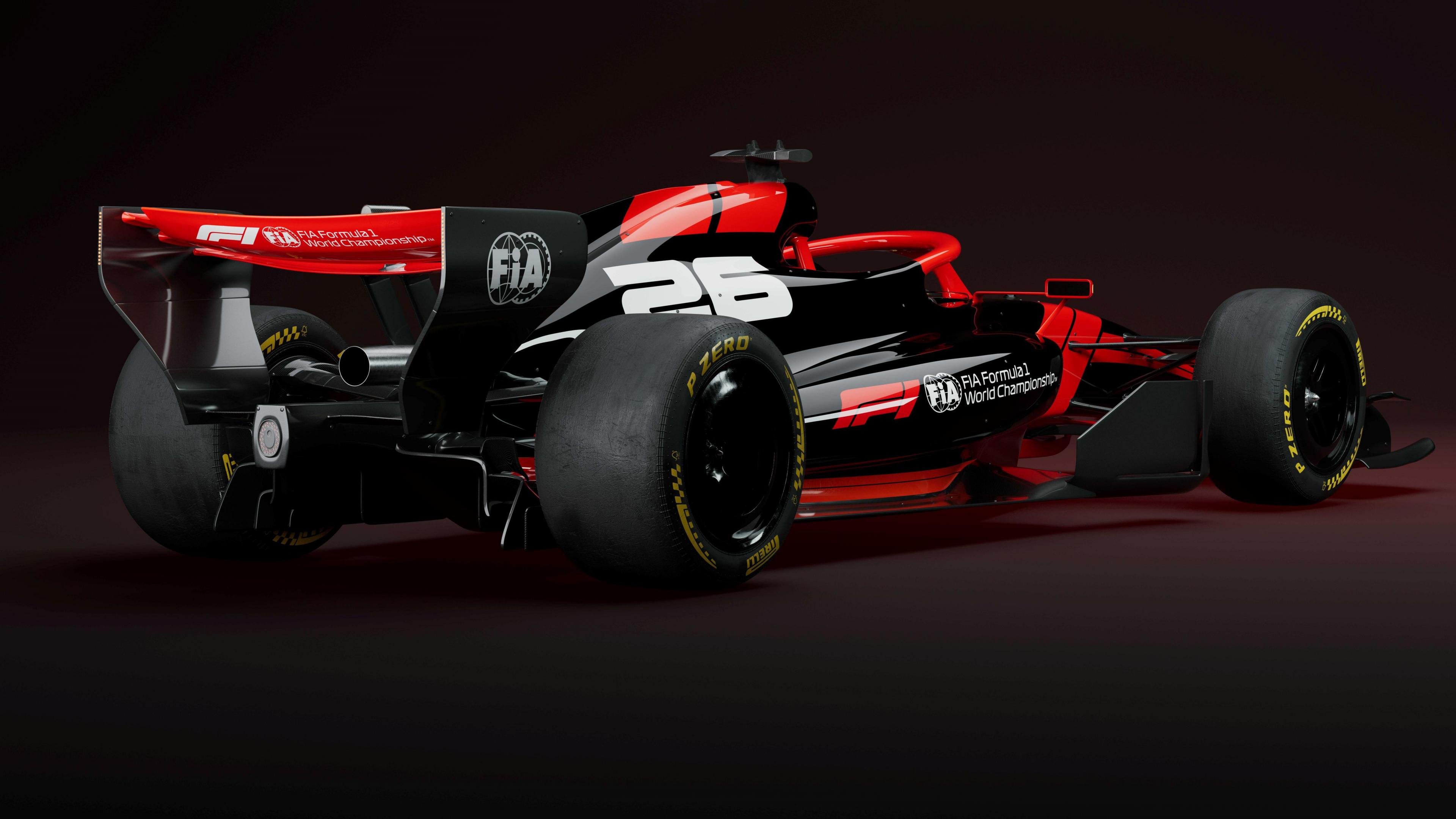
The 2026 Formula 1 cars are designed to be lighter, more agile and sustainable than this year.
Formula 1 has unveiled the simplified language that will be used to reference the technical complexities of its revolutionary 2026 technical rules.
The racing series is implementing what is potentially the most significant rules overhaul in its competitive history starting in 2026, featuring fresh chassis and power unit regulations and the required adoption of fully sustainable fuels.
The updated 1.6-litre V6 turbo hybrids, which retain the 1.6-litre V6 turbo hybrid, boast a significantly increased electrical capacity, requiring significant developments in the aero packages.
Throughout races, pilots will strategically manage battery power – including during hot laps – to secure the best performance.
Wide-ranging research were conducted with a wide range of fans, including new, casual and core fans, to understand which phrases would aid comprehension of the key features of the 2026 changes.
The key objective was to present a set of intricate features of the sport as straightforward as possible for the global fanbase.
Consequently, older technical labels for certain devices – such as "modes labelled X and Z" for the active aerodynamics – have been phased out in favour of straightforward terms that directly explain the real-world effect of the technology.
What's the New Technology?
According to rule-makers that competitors will have increased agency to choose strategies regarding power usage, harvesting, and efficiency.
The new regulations feature a range of settings that will be shown on TV overlays to aid the viewers' comprehension of the race battle.
- Passing Mode: This supersedes the present overtaking aid. It provides a short boost of battery power available when a car is less than a second the vehicle in front to execute an pass.
- Boost Mode: This is a driver-operated energy deployment from the energy recovery system that can be used in attack or defence. It provides the driver peak output at the push of a button.
Both of these strategic tools will have to be used with calculation, as the overall battery capacity is capped.
- Adjustable Aero: Both the nose and rear wings change configuration – opening on the long straight sections for reduced drag and top speed, and sealing in the corners for optimal cornering performance.
- Recharge: The system can replenish their battery with energy harvested under braking, or during partial power application at the straight's end or in sections where only reduced throttle is used.
2026 Car Specifications
The next-generation machines will be more compact and lighter compared to the 2025 spec, with a car length shortened by 200mm to 3,400mm, car width narrowed by 100mm – down to 1,900mm – and the car weight decreased by 30kg.
Overall downforce is anticipated to be reduced by approximately a significant margin, although constructors will naturally regain performance as they refine their designs.
Aerodynamic drag has been slashed by 40%. The vehicles will feature moveable wing elements – front and rear wings will move on the straight sections to reduce drag and boost top speed and revert into place for maximum cornering performance.
Tyres will retain 18-inch wheel rims, but the actual tyres will be slimmer, by a quarter-centimetre on the front and 30 millimetres on the rear axle.
What's Changing in the Engines?
The 2026 engines will have an roughly half-and-half distribution in power produced by the ICE and the battery and motor, increasing from about one-fifth electric power this year.
The ERS setup is made less complex through the deletion of the complex turbo energy recovery device, the intricate and expensive component that generated electricity from the exhaust turbo.
Cars will be obliged to compete on 100% sustainable fuel, produced using plant-based materials or lab-created processes.


